
Welcome to this week’s STEMLeap Spotlight! Each edition, we explore groundbreaking advancements in STEM, and today, we’re diving into the world of brain implants!
Have you ever wished you could control a keyboard just by thinking? What about drawing a masterpiece without ever lifting a pencil? I’m here to tell you that thanks to brain computer interfaces (BCIs), these ideas are actually becoming reality.
But first…you may be wondering: what even are Brain-Computer Interfaces?
A brain-computer interface (BCI) is a piece of technology that allows the brain to communicate directly with a computer or device except without the need for physical movement. BCIs work by detecting electrical signals in the brain, processing them, and then turning them into commands that control external devices. In even simpler words, it’s a device that connects the brain to a computer.
Companies like Neuralink and Synchron, along with leading research institutions, are creating brain implants that allow people to control devices with just their thoughts.
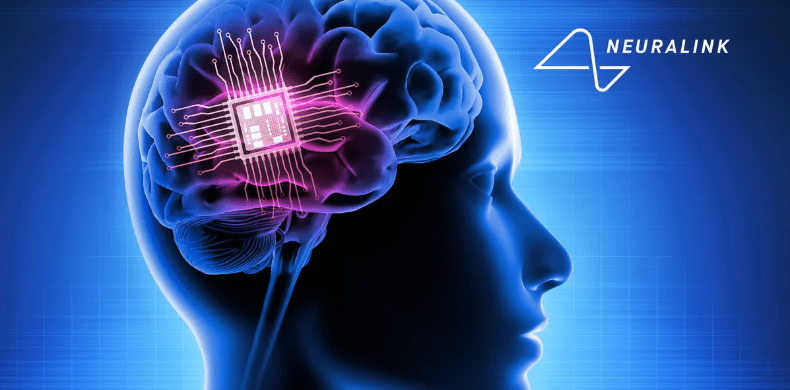
- Neuralink, a company started by Elon Musk, made history in January 2024 when it successfully implanted its first chip in a human. This chip, called N1, can read brain signals and send them to a computer wirelessly, which could help paralyzed people move again.
- Another company called Synchron has developed the Stentrode, a brain implant that doesn’t even require surgery on the brain itself. It allows patients with serious movement disorders to control a computer with their minds.
Even though Neuralink is getting a lot of attention, BCIs have actually been around for a long time. In fact, scientists started working on BCIs back in the 1970s at UCLA! Since then, the technology has improved a lot, and scientists are working to make these devices safer, smaller, and more powerful.
What’s Next?
Brain implants are still new, but they could change lives in the future. Scientists hope BCIs will help:
Restoring movement – Connecting brain signals to muscles or prosthetics could help paralyzed patients regain mobility.
Treating Parkinson’s disease – Deep brain stimulation (DBS) is already helping Parkinson’s patients reduce tremors, but advanced BCIs could make treatments even more precise.
Helping people communicate – BCIs could translate thoughts into speech or text, giving individuals with severe disabilities a way to express themselves.
Preventing seizures – Some experimental implants can detect seizures before they happen, allowing for early intervention.
This technology is developing fast, and the next decade could bring even bigger breakthroughs! In the meantime, BCIs also raise big questions—like who gets to control the data from brain implants? And how will they make sure data stays secure?
In other words, will brain implants help people live better lives, or could they create new challenges we haven’t thought about yet? Only time will tell.
Weekly resources section:
Want to test your neuroscience knowledge? Sign up for a local Brain Bee, a competition where students compete to show off their understanding of the brain! Learn more and the competition here: Brain Bee Official Website
Looking for cool neuroscience videos? Check out these awesome YouTube channels:
Neuro Transmissions – Fun and engaging explanations of how the brain works!
Neuroscientifically Challenged – Quick and easy-to-understand neuroscience lessons, including the “2-Minute Neuroscience” series.
BrainCraft – Learn how psychology and neuroscience affect everyday life.
Keep an eye out on the STEMLeap website for news of an upcoming workshop!
Lucy Lu, Feb 16th
 STEMLeap
Leave a comment